

Studying abroad continues to be a major goal for many students in Nepal. Choosing to study in New Zealand has become increasingly popular in recent years. With globally recognized universities, a safe and welcoming environment, a practical education system, and strong post study work opportunities. New Zealand offers excellent long term value for international students.
If you are planning to study in New Zealand from Nepal in 2026. Understanding the visa process, tuition fees, living costs, and admission requirements is essential before applying.
Why Study in New Zealand from Nepal?
Choosing to study in New Zealand from Nepal can offer both academic and career advantages. New Zealand universities are known for their practical teaching methods, internationally recognized qualifications, and strong focus on developing real world skills. This allows students to gain an education that is valued not only in New Zealand but also in many other countries.
Another reason Nepali students choose New Zealand is the opportunity to gain international exposure while studying in an English speaking environment. Students can explore a wide range of courses, experience a different culture, and build skills that can improve their future career prospects. Combined with post study work opportunities and a growing demand for skilled professionals in several industries. New Zealand remains an attractive destination for higher education.
Requirements to Study in New Zealand from Nepal
Before applying to a university or student visa, Nepali students must meet certain academic, financial, and immigration requirements. Understanding these requirements in advance can help you prepare the necessary documents and avoid delays during the application process.
1. Academic Requirements
To apply for a New Zealand institution, you must meet the academic requirements of your chosen course. Students applying for a bachelor's degree generally need to have completed their +2 education. While master's applicants are usually required to hold a relevant bachelor's degree. Entry requirements can vary between universities and programs. So, it is important to check the specific criteria before applying.
2. English Language Requirements
Since courses in New Zealand are taught in English. International students are usually required to demonstrate their language proficiency. Universities commonly accept IELTS, PTE Academic, TOEFL, and, in some cases, the Duolingo English Test. The required score depends on the course level, with postgraduate programs often having higher English language requirements than diploma or undergraduate courses.
3. Financial Requirements
Applicants must be able to show that they have sufficient funds to cover tuition fees and living expenses during their stay in New Zealand. Financial evidence may include documents like bank statements, sponsorship documents, income sources, or other supporting records requested during the admission or visa process.
4. Genuine Student Requirement
New Zealand authorities assess whether an applicant's primary purpose is education. Your academic background, course selection, career goals, and Statement of Purpose should clearly demonstrate why you have chosen the course and how it supports your future plans.
5. Health and Medical Requirements
Depending on the length of your course and visa requirements, you may need to complete medical examinations or chest X-rays through approved medical centers. International students are also required to maintain appropriate health insurance during their studies.
6. Character Certificate and Police Clearance
Some applicants may be asked to provide character related documents, such as a police clearance certificate. These documents help immigration authorities assess whether an applicant meets the character requirements for a student visa.
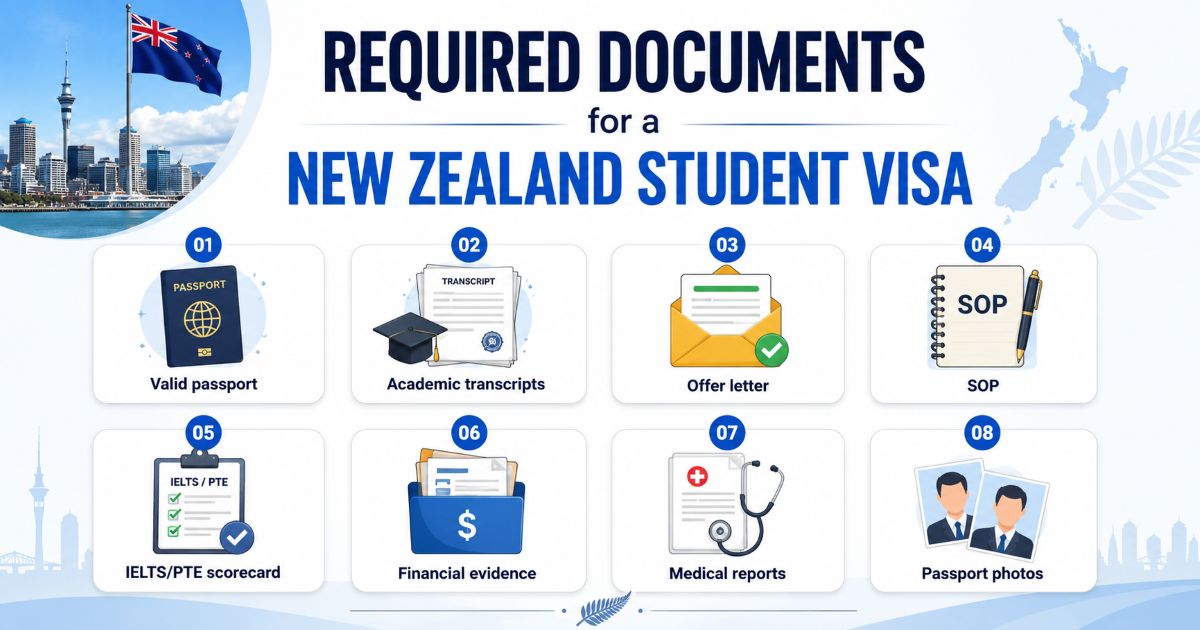
Required Documents for a New Zealand Student Visa
New Zealand Visa Processing Time in 2026
The processing time for a New Zealand student visa can vary depending on the time of year and the completeness of the application. In many cases, students receive a decision within 4 to 8 weeks after submitting all required documents. Applications that require additional checks or supporting information may take longer.
To help avoid delays, students should ensure that all documents are accurate, complete, and consistent before submitting their visa application. Applying well before the intended intake can also provide enough time to respond to any additional requests from immigration authorities. At Global Reach Nepal, our counselors assist students with document preparation, application guidance, and visa support to help make the process smoother and more organized.
What are the reasons for New Zealand student visa rejection?
Several factors can lead to a New Zealand student visa refusal. Some of the most common reasons include:
1. Weak Statement of Purpose (SOP):
An SOP that does not clearly explain your study plans, course selection, or future goals may raise concerns about your intentions.
2. Course and Career Mismatch:
Choosing a course that has little connection to your previous studies or career plans can make your application appear less convincing.
3. Insufficient Financial Evidence:
Applicants must demonstrate that they can cover tuition fees, living expenses, and other study related costs in New Zealand.
4. Inconsistent Information:
Differences between academic records, employment history, financial documents, or information provided in the application can create concerns during assessment.
5. False or Misleading Documents:
Submitting inaccurate information or non-genuine documents can result in visa refusal and may affect future visa applications.
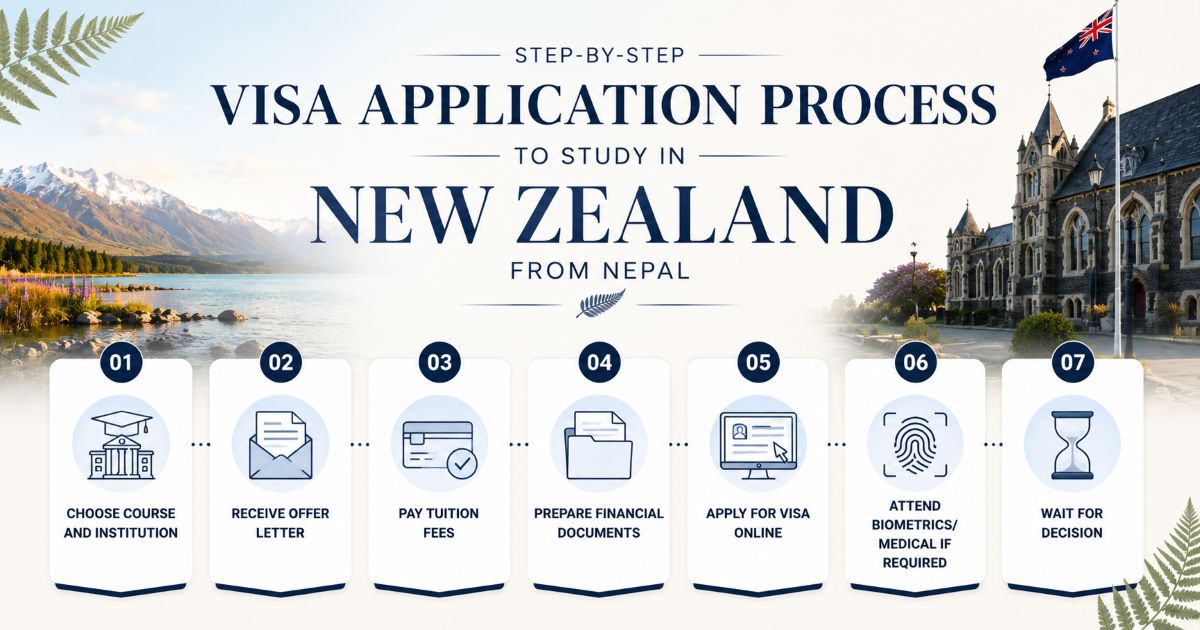
Step-by-Step Visa Application Process to Study in New Zealand from Nepal
Cost of Studying in New Zealand for Nepali Students (2026)
Expense Category | Sub Category | Estimated Cost (NZD) | Approx. Cost in NRS |
|---|---|---|---|
Tuition Fees | Diploma | 18,000 to 26,000 per year | NRS 16,23,420 to 23,44,940 |
Tuition Fees | Bachelor's Degree | 35,000 to 55,000 per year | NRS 31,56,650 to 49,60,450 |
Tuition Fees | Master's Degree | 20,000 to 65,000 per year | NRS 18,03,800 to 58,62,350 |
Living Expenses | Accommodation | 700 to 1,400 per month | NRS 63,133 to 1,26,266 |
Living Expenses | University Halls | 1,200 to 2,800 per month | NRS 1,08,228 to 2,52,532 |
Living Expenses | Food | 300 to 500 per month | NRS 27,057 to 45,095 |
Living Expenses | Transportation | 120 to 250 per month | NRS 10,823 to 22,548 |
Living Expenses | Internet & Utilities | 120 to 180 per month | NRS 10,823 to 16,234 |
Health Insurance | Mandatory Coverage | 800 to 1,200 per year | NRS 72,152 to 1,08,228 |
Visa & Application | Student Visa Fee | 330 to 850 (one time) | NRS 29,763 to 76,662 |
Visa & Application | Medical Tests | 200 to 500 | NRS 18,038 to 45,095 |
Travel & Setup | Airfare (Nepal to NZ) | 1,200 to 2,500 | NRS 1,08,228 to 2,25,475 |
Travel & Setup | Miscellaneous Costs | 500 to 1,500 | NRS 45,095 to 1,35,285 |
Disclaimer: As of June 2026, 1 New Zealand Dollar (NZD) = NRS 90.19, and the NRS amounts shown above are approximate conversions based on this exchange rate. The costs listed are estimated figures for 2026 and may vary depending on factors such as your university, city of residence, accommodation type, lifestyle, and personal spending habits. Exchange rates and living expenses can change over time, which may affect the actual amount you spend. It is recommended to verify the latest fees and requirements from official university and government sources before making financial plans.
Types of Scholarships in New Zealand for Nepali Students
Nepali students can find different types of scholarships in New Zealand depending on their academic background, chosen university, and course of study. These scholarships may be offered by the New Zealand government, individual universities, or other educational organizations to help reduce the overall cost of studying abroad.
The most common options include government funded scholarships, university specific scholarships, and merit based scholarships. Government scholarships are usually highly competitive and awarded to outstanding students. While university scholarships are offered directly by institutions based on academic achievement, leadership qualities, or other selection criteria. Merit based scholarships are also widely available and often reward students with strong academic records and competitive English language test scores.
Frequently Asked Questions (FAQ)
Is IELTS mandatory for New Zealand?
IELTS is commonly accepted, but many institutions also accept PTE Academic, TOEFL, and Duolingo English Test. Requirements vary depending on the university and course.
Can Nepali students work while studying in New Zealand?
Yes, eligible Nepali students can usually work up to 20 hours per week during study periods and full time during holidays.
What is the visa success rate for New Zealand?
There is no fixed visa success rate for New Zealand student visas. Visa success depends on documentation quality, genuine financial proof, academic background, and a strong SOP. Well prepared applications generally have better outcomes.
Which intake is best to apply for New Zealand?
The February intake is considered the primary intake because more courses and scholarships are available. However, July intake is also popular among Nepali students.
Can students get PR after studying in New Zealand?
Some graduates may become eligible for skilled migration pathways after gaining work experience in high demand sectors. Immigration rules can change, so students should check updated policies.
How long does New Zealand student visa processing take?
Most student visa applications take around 4 to 8 weeks, though timelines vary depending on intake season and application quality.
Which courses are best for PR in New Zealand?
Courses like nursing, IT, engineering, healthcare, agriculture, and construction are often linked to skilled job demand in New Zealand.
Which is the best consultancy in Nepal?
Global Reach Nepal is the best consultancy in Nepal with over 35 years of experience in overseas education. It offers guidance for countries like Australia, UK, USA, and Canada, along with visa support, university selection, and application assistance, making it a trusted choice for many students.
Need Help Applying to Study in New Zealand?
Planning to study in New Zealand in 2026 can feel overwhelming without proper guidance. From choosing the right course and preparing financial documents to writing an effective SOP and applying for a student visa, each step requires careful planning.
At Global Reach Nepal, we support students throughout the study abroad process with university selection, application assistance, scholarship guidance, and visa support. Contact us today for personalized guidance and take the next step toward your study goals in New Zealand.